The Hidden Crisis: Understanding the Devastating Consequences of Addiction

8 minute read | Mental Health & Public Health
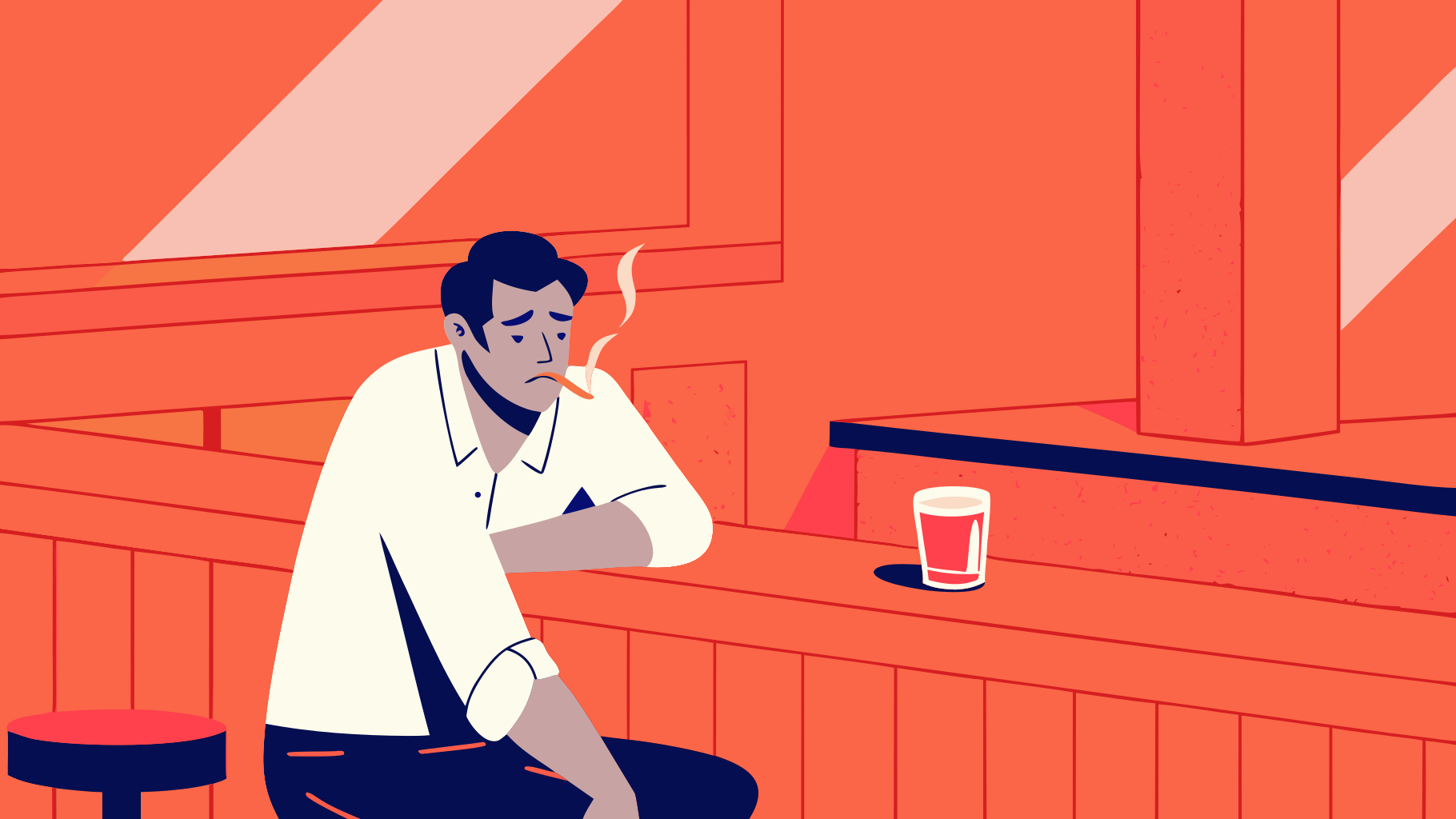
Every 11 minutes, someone in the United States dies from an opioid overdose. Millions more struggle silently with alcohol, prescription medications, gambling, or other addictions that are slowly destroying their lives, relationships, and futures.
But here’s what most people don’t understand: addiction doesn’t discriminate.
It affects doctors and laborers, teenagers and grandparents, the wealthy and the struggling. It doesn’t care about your education level, your family values, or your willpower. And the consequences? They reach far beyond the individual—rippling through families, communities, and entire societies.
If you think addiction doesn’t affect you, think again. 1 in 3 families is impacted by addiction in some way. The person sitting next to you at work, in your family gathering, or in the coffee shop might be fighting a battle you can’t see.
And if we don’t understand addiction—really understand it—we can’t help. We can only judge, stigmatize, and watch as people we love slip further into crisis.
What Addiction Really Is (And Isn’t)
Let’s start by destroying the most dangerous myth: addiction is not a moral failing.
Addiction is a chronic brain disorder characterized by compulsive substance use or behavior despite harmful consequences. It fundamentally changes brain chemistry, particularly the reward pathways that govern motivation, pleasure, and decision-making.
When someone becomes addicted:
- Their brain’s reward system becomes hijacked
- Dopamine regulation is disrupted, making normal pleasures feel dull
- Neural pathways associated with craving strengthen while those associated with self-control weaken
- The prefrontal cortex (responsible for judgment and impulse control) becomes less active
- Physical dependence creates withdrawal symptoms that feel unbearable
This isn’t weakness. This is neurological rewiring that makes “just stopping” as realistic as telling someone with diabetes to “just make more insulin.”
The Scope of the Crisis
The numbers are staggering:
- Over 46 million Americans struggle with substance use disorder
- 21 million people need substance use treatment, but only 4 million receive it
- Addiction contributes to over 700,000 deaths annually (overdoses, accidents, health complications)
- The economic cost exceeds $600 billion annually in healthcare, criminal justice, and lost productivity
- Behavioral addictions (gambling, gaming, internet, shopping) affect millions more
- 1 in 8 Americans struggle with alcohol use disorder
- 107,000+ people died from drug overdoses in a single recent year—that’s one death every 5 minutes
Behind each statistic is a human being. A son, daughter, parent, friend. Someone who started with a prescription, a drink at a party, a bet, or a way to escape pain—and couldn’t find their way back.
The Physical Devastation: How Addiction Destroys the Body
Organ Damage Across Systems
Liver: Alcohol and many drugs cause cirrhosis, hepatitis, and liver failure. The liver, responsible for detoxifying your blood, becomes so damaged it can’t function.
Heart: Stimulants increase heart attack and stroke risk. Chronic use causes arrhythmias, heart disease, and cardiovascular collapse. Injection drug use introduces infections directly into the bloodstream.
Lungs: Smoking substances damages lung tissue, causes chronic bronchitis, emphysema, and dramatically increases cancer risk.
Brain: Prolonged addiction causes cognitive decline, memory impairment, and structural brain changes. Some damage is permanent.
Kidneys: Many substances cause kidney disease, require dialysis, or lead to complete kidney failure.
Immune System: Addiction suppresses immune function, making users vulnerable to infections, diseases, and slower healing.
Overdose and Death
The most immediate physical consequence: death. Opioid overdoses kill within minutes. Alcohol poisoning can be fatal. Stimulant overdoses cause heart attacks in young, otherwise healthy people.
And deaths from addiction aren’t always dramatic overdoses—they’re also the slow erosion of health: the liver that finally fails, the heart that gives out, the infection that overwhelms a weakened body.
Infectious Diseases
Injection drug use dramatically increases HIV, Hepatitis C, and other bloodborne infections. Compromised judgment leads to risky sexual behavior. Weakened immune systems can’t fight off infections that healthy bodies would easily handle.
Malnutrition and Physical Decline
Addiction often displaces basic needs. People forget to eat, can’t afford food, or their bodies can’t absorb nutrients properly. The result: malnutrition, vitamin deficiencies, muscle wasting, and accelerated aging.
The Mental and Emotional Wreckage
Co-Occurring Mental Health Disorders
The relationship between addiction and mental illness is bidirectional and devastating:
- Nearly 50% of people with addiction also have a mental health disorder
- Depression, anxiety, PTSD, and bipolar disorder frequently coexist with addiction
- People often use substances to self-medicate mental health symptoms
- Substance use worsens mental health symptoms over time
- Untreated mental illness makes recovery from addiction nearly impossible
Cognitive Impairment
Long-term addiction damages:
- Memory: Both short-term and long-term memory decline
- Attention and focus: Concentration becomes nearly impossible
- Decision-making: The prefrontal cortex damage impairs judgment
- Executive function: Planning, organizing, and following through deteriorate
- Processing speed: Thinking becomes slower and less clear
Emotional Dysregulation
Addiction rewires emotional processing:
- Inability to experience pleasure without the substance or behavior (anhedonia)
- Extreme mood swings from high to crashing low
- Heightened anxiety and paranoia, even when not using
- Emotional numbness or inability to connect with feelings
- Suicidal ideation becomes common—addiction dramatically increases suicide risk
The Shame Cycle
Perhaps most destructive is the psychological trap:
- Use substance/engage in behavior
- Experience temporary relief or pleasure
- Face consequences (health, relationships, finances)
- Feel overwhelming shame and guilt
- Use again to escape those feelings
- Repeat, spiral deeper
This cycle is reinforced by stigma—the judgment and rejection from others that deepens isolation and shame, making recovery feel impossible.
The Social Catastrophe: How Addiction Destroys Relationships and Communities
Family Breakdown
Addiction doesn’t happen in isolation—it devastates families:
Children growing up with addicted parents experience:
- Emotional neglect and inconsistent care
- Trauma from witnessing violence, overdoses, or arrests
- Higher risk of developing addiction themselves
- Developmental delays and behavioral problems
- Increased risk of abuse and removal from the home
Spouses and partners face:
- Emotional abuse and manipulation
- Financial devastation from supporting the addiction
- Broken trust that may never fully heal
- Enabling behaviors that perpetuate the problem
- Isolation from friends and support systems
Parents of addicted individuals experience:
- Profound grief watching their child suffer
- Financial strain from supporting them or paying for treatment
- Difficult decisions about boundaries and “tough love”
- Guilt and self-blame
- Constant fear of getting “the call” that their child is dead
Employment and Financial Ruin
Addiction makes holding a job nearly impossible:
- Absenteeism and poor performance
- Inability to meet deadlines or handle responsibilities
- Interpersonal conflicts with colleagues
- Theft to fund the addiction
- Eventually, job loss and unemployment
The financial consequences compound:
- Spending thousands on substances or behaviors
- Losing income from unemployment
- Legal fees from DUIs, possession charges, or other crimes
- Medical bills from addiction-related health issues
- Debt from desperate borrowing
- Bankruptcy, foreclosure, and homelessness
Legal Consequences
Addiction frequently leads to criminal justice involvement:
- Possession charges and drug trafficking
- DUIs and vehicular manslaughter
- Theft, burglary, and fraud to fund the addiction
- Assault and domestic violence under the influence
- Incarceration, which further complicates recovery
- Criminal records that create barriers to employment and housing
Community Impact
Communities bear collective costs:
- Increased crime rates and reduced safety
- Strain on emergency services and healthcare systems
- Children entering foster care due to parental addiction
- Lost productivity and economic vitality
- Social fragmentation and neighborhood decline
The Behavioral Addictions: When It’s Not About Substances
We often think of addiction only in terms of drugs and alcohol, but behavioral addictions are equally destructive:
Gambling Addiction
- Financial ruin, bankruptcy, and homelessness
- Destroyed marriages and family relationships
- Criminal behavior to fund gambling debts
- Severe depression and high suicide rates
Gaming and Internet Addiction
- Complete withdrawal from real-world relationships
- Academic or career failure
- Physical health decline from sedentary lifestyle
- Sleep deprivation and mental health deterioration
Shopping and Spending Addiction
- Crushing debt and financial instability
- Relationship strain from secret spending
- Hoarding behaviors and cluttered living spaces
- Shame and isolation
Food Addiction
- Obesity and related health conditions
- Eating disorders and dangerous restriction cycles
- Social isolation and depression
- Medical complications from binge eating
These behavioral addictions activate the same brain reward pathways as substance addictions and can be just as devastating, yet they receive far less recognition and support.
Why Addiction Persists: The Cycle Is Nearly Unbreakable Without Help
Here’s why addiction is so hard to overcome alone:
Tolerance: The brain adapts, requiring more of the substance or behavior to achieve the same effect.
Withdrawal: Stopping causes physical and psychological symptoms that feel unbearable—anxiety, pain, nausea, tremors, seizures, or crushing depression.
Cravings: Neurological changes create powerful, sometimes overwhelming urges that hijack rational thinking.
Triggers: Environmental cues (places, people, stressors) automatically activate craving responses.
Comorbidity: Untreated mental health issues drive continued use.
Social isolation: Shame and stigma cut people off from support systems.
Lack of alternatives: Without healthy coping mechanisms or meaningful activities, people return to what temporarily works.
Brain changes: The prefrontal cortex damage means impaired judgment about stopping, even when consequences are severe.
This isn’t “just trying harder.” Recovery requires comprehensive support, evidence-based treatment, and fundamental restructuring of brain and behavior patterns.
The Cost of Misunderstanding Addiction
When we don’t understand addiction, we:
Stigmatize instead of support: Calling people “junkies” or “addicts” (without person-first language) dehumanizes and isolates them further.
Blame instead of treat: Viewing addiction as moral failure prevents people from seeking help and blocks access to treatment.
Punish instead of heal: Criminal justice approaches without treatment options don’t address the underlying disorder.
Enable without helping: Well-meaning family members often inadvertently support the addiction through lack of knowledge.
Miss early warning signs: Not recognizing symptoms means interventions come too late.
Perpetuate generational trauma: Children of addicted parents often repeat the cycle without intervention.
Waste resources: Ineffective approaches drain money without improving outcomes.
What Understanding Addiction Actually Requires
True understanding of addiction means learning:
The neuroscience: How addiction rewires the brain’s reward pathways, impulse control, and decision-making centers.
The psychology: Why people use, what drives compulsion, how trauma and mental health intersect with addiction.
The social context: How poverty, access, stigma, and community resources influence addiction and recovery.
The signs and symptoms: How to recognize addiction early across different substances and behaviors.
The treatment landscape: What works, what doesn’t, and how to match interventions to individual needs.
Evidence-based interventions: From motivational interviewing to cognitive behavioral therapy to medication-assisted treatment.
Harm reduction: How to save lives and reduce consequences even before someone is ready for full recovery.
Recovery supports: The continuum of care from detox through long-term maintenance.
Compassionate communication: How to talk about addiction without judgment, shame, or enabling.
The role of relapse: Why it’s common, what it means, and how to respond constructively.
This knowledge is critical for:
- Healthcare professionals providing patient care
- Counselors and social workers supporting clients
- Educators working with at-risk youth
- Employers creating supportive workplace policies
- Family members trying to help loved ones
- Community leaders developing prevention and intervention programs
- Anyone who wants to be part of the solution instead of the problem
The Path Forward: From Understanding to Action
Knowledge without action changes nothing. But understanding addiction empowers us to:
✅ Recognize warning signs early, before crisis hits
✅ Respond with compassion instead of judgment
✅ Connect people to appropriate resources and treatment
✅ Support recovery with evidence-based approaches
✅ Reduce stigma through person-first language and empathy
✅ Advocate for policies that prioritize treatment over punishment
✅ Build communities where people feel safe seeking help
✅ Break generational cycles by addressing root causes
The opposite of addiction isn’t sobriety. It’s connection. And connection starts with understanding.
🌟 Introducing: Understanding Addictions
Ready to move from confusion to clarity, from judgment to compassion, from helplessness to informed action?
Understanding Addictions by Intellink is a comprehensive, evidence-based course designed to demystify addiction and equip you with the knowledge and skills to respond effectively.
Course Overview
Author: Ronaldino
Platform: Intellink
Level: Beginner to Intermediate
Duration: Approx. 5 hours and 30 minutes
Certificate: Intellink Certificate in Foundations of Addiction Studies
What You’ll Master:
✅ Core definitions, models, and myths of addiction — Separate fact from stigma
✅ Psychological, neurological, and social drivers of addictive behavior
✅ Signs and symptoms across substance and behavioral addictions
✅ Short- and long-term impacts — health, mental, social, and financial consequences
✅ Evidence-based treatments — rehabilitation and recovery supports
✅ Relapse prevention, harm reduction, and aftercare planning strategies
✅ Empathic communication and community-level responses to reduce stigma
What’s Included:
📄 Downloadable concept maps & screening cheat-sheets (PDF)
📄 Conversation guides for supportive, non-stigmatizing dialogue
📋 Treatment & support directory template (customizable)
📊 Module recap infographics and quick quizzes
💭 Reflection prompts & case mini-scenarios
🎓 Intellink Certificate in Foundations of Addiction Studies
Perfect For:
- Healthcare, counseling, social work, and community professionals
- Students in psychology, sociology, public health, or nursing
- Families and friends supporting a loved one struggling with addiction
- Community leaders seeking stigma-aware approaches
- Educators working with at-risk populations
- Anyone who wants to understand and help
Requirements:
- Open, non-judgmental mindset
- Willingness to practice empathic communication
- Optional: journal for reflections and case notes
Educational Note: This course is for learning purposes and does not replace professional diagnosis or treatment.
The Curriculum: Six Comprehensive Modules
Module 1: Introduction to Addiction
Build a shared vocabulary and recognize common misconceptions. Understand definitions (use, misuse, dependence, substance use disorder), brain reward pathways, risk and protective factors, the psychology of conditioning and cravings, and how societal perceptions and stigma impact treatment access.
Module 2: Substance-Based Addictions
Recognize patterns, risks, and presentations across common substances. Deep dive into alcohol and tobacco addiction, drug addictions (opioids, stimulants, depressants), and over-the-counter/prescription medication misuse. Learn screening tools, harm reduction strategies, and overdose prevention basics.
Module 3: Behavioral Addictions
Understand non-substance compulsions and their overlaps with substance use disorders. Explore gambling and gaming addiction, food and shopping addictions, and internet/social media addiction. Learn to recognize variable reward patterns, financial red flags, and practical behavior-change tactics.
Module 4: Physical and Mental Impact of Addictions
Identify whole-person consequences and intersections with health systems. Understand organ damage, infectious disease risk, nutrition and cognitive impacts, co-occurring mental health disorders, shame cycles, and the social and financial consequences affecting work, legal status, housing, and family dynamics.
Module 5: Treatment and Recovery
Map the continuum of care and practical supports for change. Learn about motivational interviewing, CBT, contingency management, medication-assisted treatment, harm reduction vs. abstinence approaches, rehabilitation and support systems, peer recovery, and how to understand relapse as data for recommitment.
Module 6: Empathy and Supporting Addicted Individuals
Communicate effectively, reduce stigma, and mobilize community resources. Master observation skills, basic screening concepts, person-first non-shaming language, warm handoffs and resource navigation, coordinating with clinics and peer supports, and building prevention and early-intervention programming.
Optional Final Project:
Create a Support & Recovery Action Plan for a realistic case scenario. Identify risks, strengths, and goals; outline conversation scripts using non-stigmatizing language; map local treatment/referral and peer-support options; and propose a relapse-prevention and aftercare checklist.
Why This Course Matters
This isn’t theoretical academic content or judgmental moralizing.
This course delivers:
- Evidence-based understanding grounded in neuroscience and psychology
- Practical frameworks for recognizing and responding to addiction
- Compassionate communication tools that reduce harm and stigma
- Real-world case scenarios for applying knowledge
- Customizable resources you can use in your community or practice
- A biopsychosocial approach that honors the complexity of addiction
You’ll finish equipped to make a real difference in someone’s life—or your own.
The Stakes Couldn’t Be Higher
Every day you wait to understand addiction:
- Someone you know might be suffering in silence
- Opportunities for early intervention slip away
- Stigma continues to prevent people from seeking help
- Families fracture without the knowledge to support recovery
- Communities lose members to preventable deaths
Or you can choose to:
- Learn how addiction really works
- Recognize warning signs early
- Respond with compassion and effectiveness
- Connect people to life-saving resources
- Be part of breaking the cycle
Understanding saves lives. Ignorance costs them.
👉 Enroll in Understanding Addictions Today
Course Link: https://ocpn.intellink.co/courses/understanding-addictions/
Someone’s life might depend on what you learn today. Will you be ready when it matters?
If you or someone you love is struggling with addiction, you’re not alone. The National Helpline (SAMHSA) is available 24/7 at 1-800-662-HELP (4357). Help is available. Recovery is possible.
About Intellink:
Intellink provides evidence-based education that empowers individuals and communities to address complex health and social challenges. Our courses combine rigorous research with practical application to create meaningful, lasting change.
About the Author:
Ronaldino is an addiction studies educator passionate about reducing stigma and expanding access to evidence-based information about substance use disorders. With expertise in psychology and public health, he creates resources that bridge the gap between research and real-world support for individuals, families, and communities affected by addiction.
Educators regularly encounter students struggling with addiction or affected by family substance use. Understanding signs, communicating compassionately, and connecting resources can literally save lives.
Addiction is neurological disease, not moral failure. Comprehensive education reduces harmful stigma and increases access to evidence-based treatment. This curriculum equips professionals with essential knowledge.
Online communities often include members struggling with addiction. Moderators need knowledge to respond compassionately, recognize crisis signs, and connect people with appropriate professional resources.