

You Are What You Eat: Why Nutrition Is Your Most Powerful Health Tool

7 minute read | Health & Wellness
Every single day, you make decisions that directly impact your health, energy, mood, and longevity. Not through expensive medications or complicated treatments—but through something much simpler: what you put on your plate.
Your body replaces millions of cells every day. Your blood cells regenerate every few months. Your skin renews itself every few weeks. And the building blocks for all of this? The food you eat.
Yet despite nutrition being the foundation of health, most of us navigate our food choices based on habit, convenience, or conflicting advice from social media. We know we “should” eat better, but understanding what that actually means—and why it matters—remains frustratingly unclear.
It’s time to change that.
The Hidden Power of Nutrition
Let’s start with a truth that might surprise you: nutrition is the most powerful medicine we have access to every single day.
Consider these facts:
- 80% of chronic diseases (heart disease, type 2 diabetes, certain cancers) are directly influenced by diet and lifestyle choices
- Poor nutrition is linked to one in five deaths globally
- What you eat affects not just your physical health but your mental health, immune function, energy levels, sleep quality, and even cognitive performance
- The gut-brain connection means your food choices directly influence your mood, anxiety levels, and decision-making ability
Yet here’s the paradox: we live in an age of unprecedented access to food and information, but nutrition-related diseases are at all-time highs. We’re simultaneously overfed and undernourished.
Why? Because knowing what to eat has become more confusing than ever.
The Nutrition Information Crisis
One day fat is the enemy. The next day, it’s carbs. Then sugar. Then gluten. Then everything becomes about “clean eating” or “detoxing” or the latest trending diet that promises transformation.
The result? Decision fatigue, overwhelm, and giving up.
Most people fall into one of these camps:
- The Confused: They want to eat better but don’t know where to start or who to trust
- The Trend Followers: They jump from diet to diet, following hype instead of science
- The Myth Believers: They make choices based on misinformation (“carbs are bad,” “you need to detox,” “supplements are better than food”)
- The Avoiders: They’ve given up trying to figure it out and just eat whatever is convenient
But here’s the truth: nutrition doesn’t have to be complicated. When you understand the fundamentals—the actual science of how nutrients work—the noise falls away and confident, informed choices become natural.
What Good Nutrition Actually Does for You
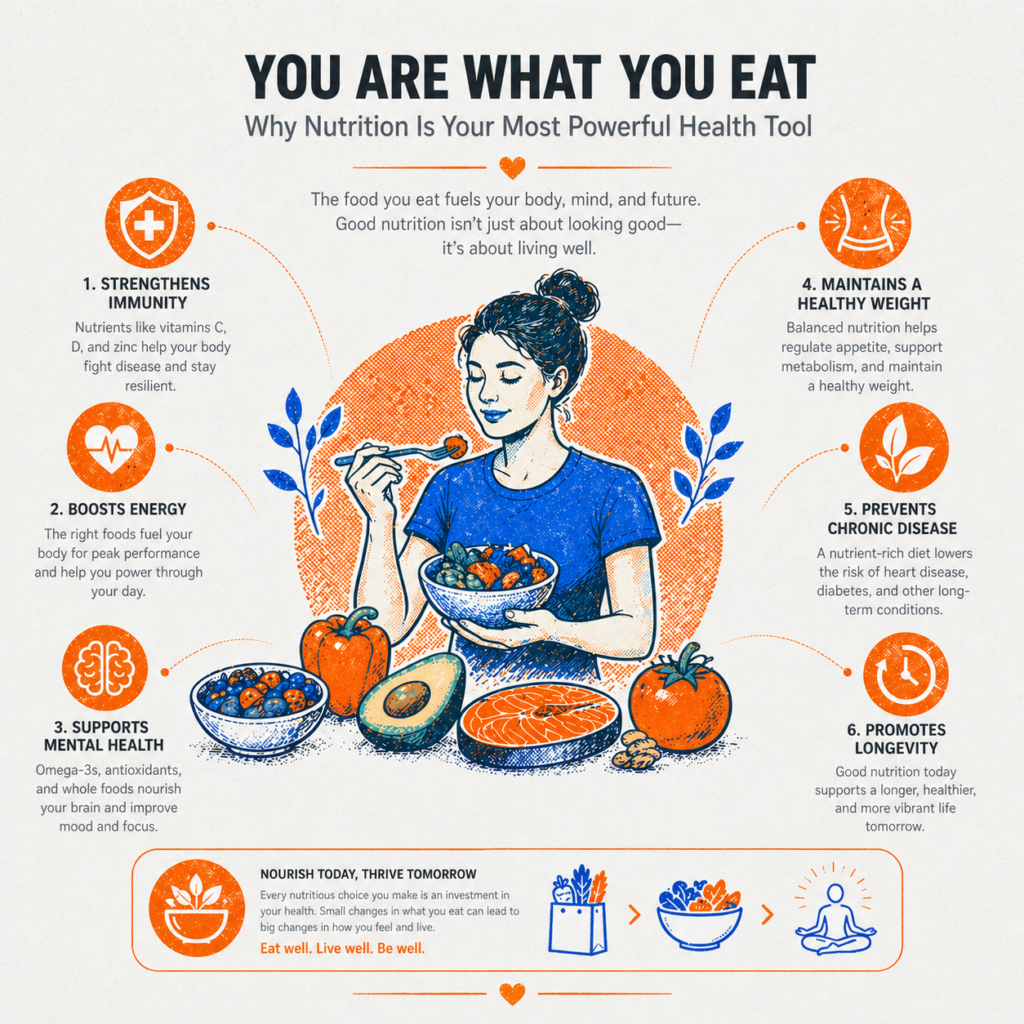
Let’s talk specifics. When you prioritize good nutrition, here’s what happens:
1. Sustainable Energy Throughout the Day
No more 3 PM crashes. No more relying on caffeine and sugar to power through. Understanding how carbohydrates, proteins, and fats work together means you can fuel your body for stable, sustained energy—not the rollercoaster of spikes and crashes.
2. A Stronger Immune System
Your immune system relies on specific vitamins and minerals to function properly. Deficiencies in nutrients like vitamin D, vitamin C, zinc, and iron directly weaken your body’s ability to fight infections and recover from illness.
3. Disease Prevention
Heart disease, type 2 diabetes, certain cancers, and metabolic syndrome are all heavily influenced by dietary patterns. The right nutrition doesn’t just avoid disease—it actively protects and strengthens your body against these conditions.
4. Better Mental Health
The connection between gut health and mental health is profound. What you eat affects neurotransmitter production, inflammation levels, and brain function. Studies show that improving diet quality can reduce symptoms of depression and anxiety.
5. Healthy Weight Management
Not through restrictive diets or calorie obsession, but through understanding energy balance, portion control, and nutrient density. Sustainable weight management happens when you understand how food works in your body.
6. Improved Athletic Performance and Recovery
Whether you’re a competitive athlete or just someone who wants to feel strong and capable, proper nutrition optimizes muscle recovery, reduces inflammation, supports endurance, and maximizes training results.
7. Graceful Aging
Nutrition affects everything from bone density to skin elasticity to cognitive decline. The choices you make today influence your quality of life decades from now.
The Most Dangerous Nutrition Myths
Let’s clear up some pervasive myths that keep people confused:
Myth 1: “Carbs are bad”
Reality: Carbohydrates are your body’s preferred energy source. The issue isn’t carbs—it’s choosing refined carbs over complex, fiber-rich options.
Myth 2: “Fat makes you fat”
Reality: Healthy fats are essential for hormone production, brain health, and nutrient absorption. It’s about choosing the right types (unsaturated vs. trans fats) and appropriate portions.
Myth 3: “You need to detox”
Reality: Your liver and kidneys are expert detoxification systems. “Detox” products and cleanses are marketing, not science.
Myth 4: “Natural/organic automatically means healthy”
Reality: Organic sugar is still sugar. Natural doesn’t mean low-calorie or nutrient-dense. Context matters.
Myth 5: “Supplements can replace a poor diet”
Reality: Whole foods provide nutrients in forms your body recognizes and absorbs best, plus fiber and compounds supplements can’t replicate.
Myth 6: “One diet works for everyone”
Reality: Biochemistry varies. What works for your friend may not work for you. Individual factors like genetics, activity level, health status, and goals all matter.
Why Most Diet Approaches Fail
Here’s what diet culture gets wrong: it focuses on restriction, rules, and short-term results instead of understanding, flexibility, and sustainable habits.
People fail at diets not because they lack willpower, but because:
- They don’t understand why they’re making specific choices
- The approach is too restrictive to maintain long-term
- They’re following trends instead of science
- They haven’t learned to adapt principles to their actual life
- They view food as the enemy instead of as nourishment
The antidote? Education. When you understand how nutrients work, what your body actually needs, and how to read nutrition information critically, you don’t need to follow someone else’s rules—you can make informed choices that work for your life.
The Foundation: Understanding Macronutrients
Your body needs three primary macronutrients in larger quantities:
Carbohydrates: Your body’s preferred energy source, especially for your brain and muscles. Found in grains, fruits, vegetables, and legumes. Choose complex carbs with fiber for sustained energy.
Proteins: The building blocks for muscle, tissue repair, immune function, and countless enzymatic processes. You need adequate protein for recovery, satiety, and maintaining lean body mass.
Fats: Essential for hormone production, brain function, vitamin absorption, and cell membranes. Choose sources like avocados, nuts, seeds, olive oil, and fatty fish.
The magic isn’t in eliminating any macronutrient—it’s in understanding their roles and balancing them according to your needs.
The Hidden Heroes: Micronutrients
Vitamins and minerals might be needed in smaller amounts, but their absence creates massive problems:
- Vitamin D deficiency affects bone health, immune function, and mood
- Iron deficiency causes fatigue, weakness, and cognitive impairment
- B-vitamin deficiencies impact energy production and nervous system function
- Magnesium deficiency affects muscle function, sleep, and stress response
Most people don’t even know they’re deficient until symptoms appear. Understanding which foods provide which nutrients helps you build a naturally comprehensive diet.
The Power of Hydration
Water isn’t just about quenching thirst—it’s involved in every cellular process in your body. Proper hydration affects:
- Energy levels and cognitive function
- Physical performance and recovery
- Digestion and nutrient absorption
- Temperature regulation
- Waste removal and detoxification
Yet chronic dehydration is incredibly common because people mistake thirst for hunger, rely on caffeinated beverages, or simply forget to drink water.
Building a Healthy Relationship With Food
Good nutrition isn’t just about nutrients—it’s about developing a sustainable, positive relationship with food that includes:
- Mindful eating: Paying attention to hunger cues, satiety, and enjoyment
- Flexibility: Having principles without rigid rules that create anxiety
- Cultural appreciation: Honoring food traditions and social connections
- Practicality: Making choices that fit your real life, not an idealized version
- Balance: Allowing treats and flexibility without guilt
This psychological component is often overlooked but is crucial for long-term success.
Why Nutrition Education Matters
Here’s what happens when you truly understand nutrition:
✅ You stop falling for fad diets and marketing gimmicks
✅ You can read nutrition labels and actually understand what they mean
✅ You make confident choices at restaurants and grocery stores
✅ You adapt your nutrition to your changing needs (aging, activity level, health goals)
✅ You can teach your children healthy habits based on facts, not fear
✅ You optimize your health, performance, and longevity
✅ You save money by not buying unnecessary supplements or trendy “health” products
Knowledge is power—and in nutrition, it’s literally life-changing.
Your Path to Nutritional Mastery
Whether you’re a complete beginner trying to understand the basics, a fitness enthusiast looking to optimize performance, a healthcare provider wanting to better advise patients, or simply someone who wants to take control of their health—understanding nutrition is non-negotiable.
The good news? You don’t need a degree in nutritional science to make informed choices. You just need the fundamentals explained clearly, backed by science, and made practical for real life.
🍎 Introducing: Fundamentals of Nutrition
Ready to finally understand what fuels your body and make informed food choices with confidence?
Fundamentals of Nutrition by Intellink is a comprehensive, science-based course designed to demystify nutrition and empower you with knowledge you’ll use every single day.
Course Overview
Author: Ronaldino
Platform: Intellink
Level: Beginner
Duration: Approx. 5 hours and 30 minutes
Certificate: Intellink Certificate in Nutritional Foundations
What You’ll Master:
✅ The fundamentals of nutrition and digestion — How your body processes food
✅ Macronutrients and micronutrients — Their roles and functions in the body
✅ How to interpret dietary guidelines and nutrition labels — Make informed choices
✅ The relationship between diet and chronic diseases — Prevention through nutrition
✅ Hydration and electrolyte balance — Supporting optimal bodily function
✅ How to distinguish facts from myths — Navigate nutrition misinformation
What’s Included:
📄 Downloadable nutrition summary sheets (PDF)
📄 Dietary guideline reference charts
📝 Interactive quizzes per module
📋 Sample meal-planning templates
🎥 Video lectures and infographic summaries
🎓 Intellink Certificate in Nutritional Foundations
Perfect For:
- Culinary professionals exploring the science behind food
- Healthcare providers integrating nutrition into patient care
- Fitness trainers optimizing diet for performance and recovery
- Anyone curious about the relationship between diet and health
- Parents wanting to make better nutritional choices for their families
- Anyone tired of nutrition confusion and conflicting advice
No Prior Knowledge Required
This course starts at the beginning and builds your knowledge systematically. Whether you can barely read a nutrition label or you’re already health-conscious but want deeper understanding, this course meets you where you are.
The Curriculum: Six Comprehensive Modules
Module 1: Introduction to Nutrition
Understand what nutrition is, its role in human health, and how nutrients sustain life. Learn the digestive process, energy balance, metabolism, and the difference between malnutrition and overnutrition.
Module 2: Macronutrients
Deep dive into carbohydrates, proteins, and fats—the three nutrient groups that provide energy and structural support. Learn about simple vs. complex carbs, amino acids and protein synthesis, and the different types of dietary fats and their effects on health.
Module 3: Micronutrients
Explore the vital roles of vitamins, minerals, and water. Understand fat-soluble vs. water-soluble vitamins, essential minerals like calcium and iron, and the critical importance of hydration and electrolyte balance.
Module 4: Dietary Guidelines and Food Choices
Learn to interpret global dietary guidelines, understand Recommended Dietary Allowances (RDAs), read nutrition labels with confidence, build balanced meals, and navigate special diets like vegetarian, vegan, and keto approaches.
Module 5: Nutrition and Chronic Diseases
Understand how nutrition influences heart disease, diabetes, obesity, and other chronic conditions. Learn meal planning strategies for cardiovascular wellness, blood sugar regulation, and sustainable weight management.
Module 6: Debunking Nutrition Myths
Develop critical thinking toward dietary misinformation. Separate facts from fads in popular diets, understand when supplements are necessary vs. optional, and learn to evaluate nutrition information from reliable sources.
Optional Final Project:
Create your own 7-Day Nutrition Plan using the principles learned throughout the course. Include daily macronutrient distribution, hydration goals, and at least one special diet adaptation tailored to your needs.
Why This Course Works
This isn’t trendy diet advice or one-size-fits-all meal plans. This is science-based education that gives you:
- Clear explanations of complex nutritional concepts
- Evidence-based information you can trust
- Practical application for real-world decision-making
- Interactive quizzes to reinforce learning
- Visual aids (infographics, videos) for different learning styles
- Meal planning tools you can use immediately
You’ll finish with confident knowledge, not just temporary motivation.
The Investment in Your Health
Consider what better nutrition could mean:
- More energy to enjoy your life and pursue your goals
- Reduced risk of chronic diseases that steal quality of life
- Better mental clarity and emotional stability
- Improved physical performance and recovery
- Confidence in your food choices
- The ability to teach your family healthy habits
- Potentially thousands saved on unnecessary supplements and fad diet products
The course is 5.5 hours. The benefits last a lifetime.
Ready to Take Control of Your Health?
You have three options:
- Continue feeling confused by conflicting nutrition advice
- Keep trying different diets without understanding why they work (or don’t)
- Learn the fundamentals and make informed choices for the rest of your life
The choice is yours.
👉 Enroll in Fundamentals of Nutrition Today
Course Link: https://ocpn.intellink.co/courses/fundamentals-of-nutrition/
Your body is replacing cells right now. Give it the best building blocks possible. Start with knowledge.
What’s your biggest nutrition question or challenge? Share in the comments below—we’d love to hear from you!
About Intellink:
Intellink delivers science-backed courses that transform complex topics into accessible, actionable knowledge. From health and wellness to professional development, our programs are designed for real-world application and lasting impact.
About the Author:
Ronaldino is a nutrition educator passionate about making nutritional science accessible to everyone. With expertise in dietetics and health communication, he creates evidence-based resources that cut through the noise and empower people to make confident, informed choices about their health.

Nutrition profoundly impacts mental health outcomes. Gut-brain connection research validates dietary interventions for anxiety and depression. This comprehensive curriculum fills critical knowledge gaps for professionals.
Every educator should understand nutrition fundamentals to support student learning and development. Energy levels, focus, and behavior connect directly to dietary choices. Essential professional knowledge.